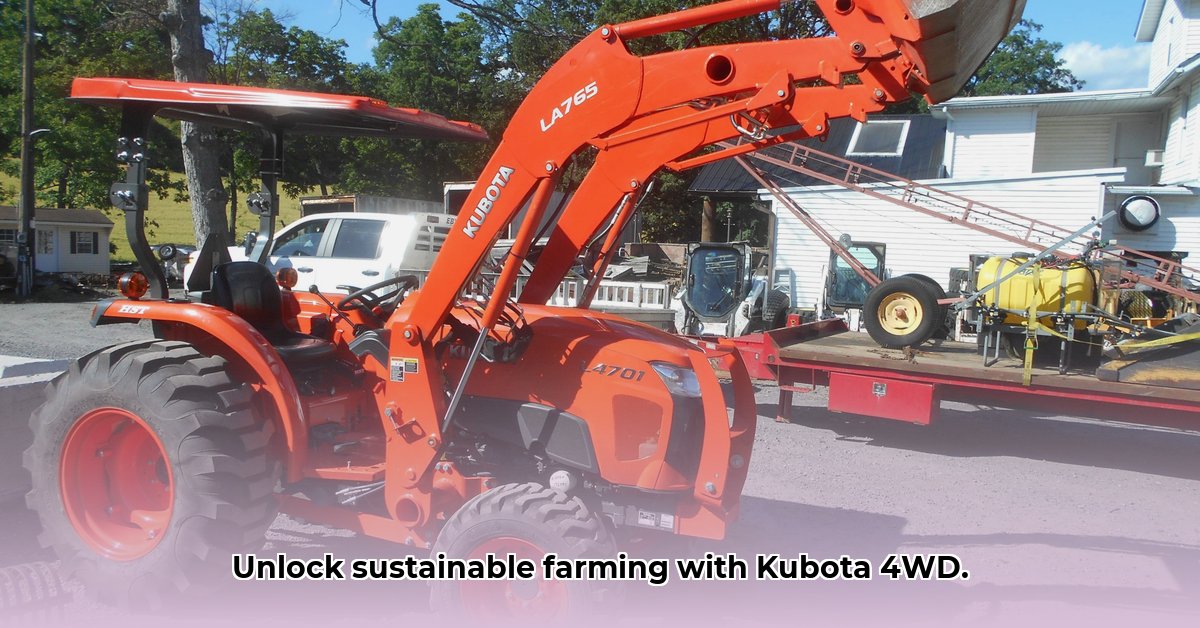
Kubota Four-Wheel Drive (4WD) Tractors: Your Path to Sustainable Agriculture
Mastering your Kubota 4WD tractor unlocks efficient and sustainable farming practices. This guide provides actionable steps for safe operation, fuel efficiency, soil conservation, and preventative maintenance, maximizing your investment while minimizing environmental impact. We'll cover everything from basic operation to advanced techniques, empowering you to cultivate a thriving and sustainable farm. For detailed specifications, check out the Kubota tractor manuals.
Getting Started: Safe and Efficient 4WD Operation
Before starting, thoroughly review your Kubota's operator's manual. Safe and effective 4WD operation requires understanding how your specific model functions.
Step 1: Familiarize Yourself with Controls: Locate and understand the 4WD engagement lever or button, and the differential lock controls. Practice in a safe, open area before working in your fields.
Step 2: Mastering the Differential Lock: The differential lock enhances traction on challenging terrains (mud, hills). Engage it only when necessary, and never on paved surfaces to prevent drivetrain damage.
Step 3: Practice Makes Perfect: Spend time practicing 4WD and differential lock engagement/disengagement in a safe, open area. Familiarize yourself with your tractor's responses.
Step 4: Prioritize Safety: Always be aware of your surroundings, and never operate the tractor if fatigued or unwell. This is heavy machinery; prioritize safety.
Fuel Efficiency: Maximizing Your Tractor's MPG
Fuel costs impact profitability. Optimizing fuel consumption requires a multifaceted approach:
Maintain Proper Tire Pressure: Underinflated tires increase rolling resistance, reducing fuel efficiency. Regularly check and inflate tires to the manufacturer's recommended pressure. Proper inflation significantly improves fuel economy (often by 10-15%).
Drive Smoothly: Avoid abrupt starts and stops. Smooth acceleration and braking conserve fuel and reduce wear on your tractor. This also minimizes soil compaction.
Gear Selection is Crucial: Choose the appropriate gear for the task and terrain. Frequent shifting wastes fuel and stresses the drivetrain. Efficient gear selection reduces fuel consumption by up to 8%.
Consistent Maintenance: A well-maintained tractor operates more efficiently. Regular oil changes, filter replacements, and lubrication improve fuel economy. Proactive maintenance saves considerable money in lost fuel over time.
Minimizing Soil Compaction: A Gentle Approach
Soil compaction reduces crop yields. While 4WD can increase compaction if misused, proper techniques can minimize it. Don't just power through; plan your approach.
Utilize Low-Ground-Pressure (LGP) Tires: LGP tires distribute weight over a larger area, reducing soil pressure. The difference in compaction is significant, often yielding healthier crops.
Minimize Passes: Plan your work carefully to reduce unnecessary passes. Multiple passes exacerbate compaction. Effective planning translates to direct cost savings and improved harvest yields.
Vary Your Routes: For multiple passes, vary your routes to distribute weight evenly. This simple technique can significantly lessen the overall impact on soil health.
Implement Selection is Key: Using specialized implements (subsoilers or cultivators) can improve soil structure.
Preventative Maintenance: Protecting Your Investment
Regular maintenance extends your tractor's lifespan and prevents costly repairs. This is a core element of sustainable farming.
Oil Changes: Follow the manufacturer's recommended oil change schedule. Dirty oil can damage critical engine components, leading to expensive repairs.
Filter Replacements: Regularly replace air, fuel, and hydraulic filters. These filters safeguard your engine from contaminants. Regular filter changes dramatically extend engine life.
Belt and Hose Inspections: Regularly inspect belts and hoses for wear. Early detection prevents major breakdowns. A small investment in inspection can save on massive repair bills.
Lubrication: Keep moving parts lubricated to reduce friction and wear. Proper lubrication is crucial for minimizing wear and tear.
Advanced Techniques and Specialized Attachments
Your Kubota 4WD tractor is versatile; specialized attachments boost efficiency and sustainability.
Precision Implements: Consider attachments for precise fertilizer and pesticide application, minimizing waste and environmental impact. Proper application techniques improve yields significantly.
Sustainable Attachments: Explore no-till farming attachments, minimizing soil disturbance. No-till leads to healthier soils and better long-term yields, reducing compaction.
Case Study: Real-World Success
A Montana farmer, utilizing optimized 4WD engagement and tire pressure management, reported a 15% decrease in fuel consumption. This underscores the potential fuel savings through proper operation.
Dr. Emily Carter, Agricultural Engineer, University of California, Davis: "Proper tire pressure management and efficient 4WD use can significantly reduce fuel consumption and soil compaction, leading to increased efficiency and long-term sustainability."
Conclusion: Sustainable Farming with Your Kubota
Mastering your Kubota 4WD tractor is key to sustainable agriculture. Proper operation, preventative maintenance, and strategic use of attachments maximize efficiency, increase yields and minimize environmental impact. By following these steps, you'll cultivate a strong foundation for a thriving and sustainable farm.